The best known Martin and King car in the Club at present is Charles Bush’s award-winning Phantom 1
ONE DAY OUT OF CURIOSITY I looked up Martin and King, the noted Australia coachbuilding company, on Wikipedia. To my surprise, the article was all about locomotives and rolling stock for railways, with a passing mention of a body built for a Buick in the 1950s. In an email to Tom Clarke I expressed my surprise, and back came a long autobiographical article about the Company by one of the King brothers, which had been published in The Vintage Drivers’ Club Magazine in 1969. It’s too long for here, but provided the material for this short article
MARTIN AND KING was founded in 1888 by J. H. Martin, a coach bodymaker, and A. King, a coachsmith. Martin left in 1889, and had no further connection with the business. Martin and King built only horse-drawn coaches and wagons until 1914, when the business built their first motor car body, on a Ford T. (In 1900, as a one-off, they had built the body for the Thomson Steam Wagon now in the Melbourne Museum).
The Thomson Sream Wagon with Martin & King Bodywork (Museum of Victoria)
J. H. King’s two sons John and William joined the company when they completed their education, and motor car body construction began in earnest in 1922. Martin and King’s exhibits for the 1923 and 1924 Melbourne Motor Shows, both on Delage chassis, won “outstanding body of the Show” recognition, and led to their first Rolls-Royce body in 1924.
SOON MARTIN and King were among the leading Australian coachbuilders, built for all the prestige brands, and were Rolls-Royce’s own preference for Australian bodies. Martin and King bodies were more robust and had better dustproofing that British bodies, quite important for Australian road conditions. Over the years they built for Rolls-Royce, Bentley, Delage, Hispano-Suiza, Bugatti, Jaguar and many others. The developed a technique of limited production body panel pressing by using concrete dies covered in sheet steel, and the expanding business did all its own upholstery, paint, and detail interior cabinet work. The business grew, and many bodies were built in the 1930s.
1929 Rolls-Royce 20/25 with 1930s Martin & King coachwork. It sold at auction in 2015 for $105,000 (Shannons)
Another R-ROC WA member’s Martin & King body, on the Falconers’ Silver Ghost. The additional lights are essential in the West Austrslian wheatbelt to spot kangaroos. (Con Keogh)
The outbreak of WW2 saw the suspension of motor body work, and the move into war production, including making urgent spares for aviation engines. Towards the end of the War they had no less than five scattered factories, and so purchased the new greenfield site between Clayton and Springvale to consolidate their facilities. (Cnr Westall and Centre Rds).
The Springvale Martin and King plant after VW acquired it.It now sprawls all the way up to the “office Block” (VW)
Motor body building resumed after WW2, but motor bodies alone could not sustain the company, so they diversified into other metal products such as chicken incubators and rail coaches. They secured a contract to build Ford Anglia bodies for the Ford Motor Company, producing about 500. (These bodies do not have the Martin and King plate).
A Martin & King Ford Anglia 103E Ute (Creative Commons)
IN 1952 Martin and King was floated as a public Company, and the railway business was becoming dominant. However, they remained in the motor business in surprising ways. One important motor contract was to take up the assembly of the VW 1200 for VW Australia. This began in 1954, and in 1957 the plant was sold to VW Australia. It became the Clayton Volkswagen factory, and Bill King, eldest son of the founder of Martin and King, became MD of VW Australia. Still later, when VW beetle production ended in Australia, the factory was taken over to manufacture Nissan cars in Australia. (It is now let to various businesses.)
Martin and King’s bespoke motor body production dwindled, and ended with the widespread move to unit-body cars in the late 1950s. Meanwhile, they remained in business, but from the late 1950s onwards their focus was on railway locomotives and rolling stock.
There are about 20 Martin and King bodied Rolls-Royces owned by R-ROC Australia members, two in WA: The Bush Phantom 1 and the Falconer Ghost, both seen above. The Falconer Ghost was rebodied with an early 1930s sedan body and resides on a farm near Coorow.
Many of the Martin and King bodies have been discarded in recent years. Though very robust, they are also very heavy, and the trend has been to replace these bodies with lighter, preferably open, bodies.
Sources: J. H. King, “Martin and King”, Vintage Drivers’ Club Magazine, Victoria, March-April 1969. Tom Clarke and David R Neely: Rolls-Royce and Bentley in a Sunburnt Country, Sir Henry Royce Foundation, Melbourne, 1999
BACK IN THE earlies, Lord Montagu of Beaulieu, the pioneering automobilist, launched a magazine devoted to the new craze of automobilism. It was called, succinctly, THE CAR.
He soon saw a need for a publication which would help intrepid travellers to drive (or have their chauffers drive them) around the mysterious and then unmapped highways and byways of Britain.
The Car Road Book was born. I have two of them, one dating from about 1904, which I picked up in a second-hand bookstore and which was inscribed with the name ‘Shafto.’ Undoubtedly it had been owned by the very Shafto of Shafto’s Lane, who was a Perth City Counciller around then. My other edition is 1910, which tied in nicely with our sort of motor car, as the new and successful 40/50 HP Rolls-Royce was becoming established as the Best Car In The World.
The 1910 book is leather-covered (one cover missing, which is why I got it cheap) and about the size of a hardback novel. It is officially entitled “The Car” Road Book and Guide, an Encyclopedia of Motoring, published by The Car Illustrated, 1910.
To give you an idea of how things worked, I found a section of the Great North Road which is more or less intact, and consulted the Road Book to suss it out. We are travelling up the Great North Road from Stilton, and expect to finish the day at Stamford in Lincolnshire. The Gazeteer section tells us all we need to know about Stamford:
There is a sort of code in those symbols: early closing day is Thurs.; there is a railway station and a telephone exchange. At the George Hotel we can have a bed, a feed, buy petrol (in 2 gallon tins), and park the car in a garage.
If we need more, Messers Rollings also sell petrol, have a mechanic, sell tyres and repair them, and recharge acculumators if needed. Just down the road the Pick Motor Works (who actually manufactured a car called New Pick). offered much the same but would also do repair work on Sundays in an emergency. And of course there’s a nine-hole golf course at the stately home of Burghley Park.
Sounds good, we’ll check in at The George.
Crank up the 40/50 HP Royce, Jeeves, and we will depart forthwith!
Just to confuse modern readers, the mileage chart above reads top down, even though we are driving north from Stilton to Stamford. The hand tells you that to get to Peterborough and on to Skegness (It’s Bracing!) you have to rurn off at Norman Cross. Otherwise, keep straight on to Stamford.
IN 1910 THE ROAD was probably ‘macadamised’, but not tar-macadam, so dust was always a problem. And it wouldn’t have been very wide. Today, several stretches of the original Great North Road survive hereabouts, superseded by the 4-lane roaring monster of the A1(M) not that far away. Below is a section of the old Great North Road just north of Stamford, a section now known as the B1081, looking much as it did when the new A1 was punched through farmlands to the west in, I think, the 1930s.
In 1910 it would have been narrower, and almost certainly dirt, and the most distant of the two buildings would have been there. I think the nearer one (actually as terrace of cottages) is post WW2.
As you loll back in the rear compartment of your 40/50 HP Rolls-Royce limousine, you can look forward confidently to arriving at The George in Stamford, 15 miles away, for dinner.
And what of The George? Is it still there?
Yes, it is. In fact it’s a Stamford landmark, with a wrought iron arch spanning the full width of the Great North Road to the building opposite. And here it is, “The George, of Stamford”, on the right, a handsome establishment. The archway tells you it was a coaching in once, and no doubt in 1910 one took one’s 40-50 HP through the arch into the courtyard for the night. One doubts that it still sells petrol in 2 gallon tins… And the street scene tells you exactly why you don’t drive north along the old Great North Road any more, all narrow streets and traffic lights, but take the A1(M) instead.
Lord Montagu’s splendid book included “unusual speed limits” (i.e. speed traps, but happily there wasn’t one in Stamford); lighting-up times; ferry charges; even useful tips on automobilists’ clothing, if you are travelling in an open car.
Maps in the book are little more than sketches, to clarify those very detailed route instructions contained in the book, with distance from London measured to the quarter-mile. The section below, cropped from a larger map, shows the section from Stilton (of cheese fame) to Stamford which I’ve been using as an illustration of Lord Montagu’s handy reference.
Incidentally, using the Road Book in conjunction with UK’s superb Ordnance Survey Maps, you can easily pick up the many miles of The Great North Road which have been bypassed by the motorways and which will allow a nostalgic wallow in the Good Old Days when we were all very rich and all owned 40/50 HP Rolls-Royces.
I purchased “Gently” in 1997, and was never troubled by the excessive noise of the ticking clock fitted to the glove box door at any speed… because it didn’t work. I have been meaning to take it out and get it fixed, but other priorities have intervened.
At last it has been fixed, and runs beautifully, keeping perfect time.
The back of the clock has a cover held by two grub screws on either side of the base. There are three other screws holding the whole clock into the wooden aperture of the glove box lid. There are three wires supplying the clock, two of which run the clock— a black and a light mauve wire— going severally to two simple screw posts. There was a separate green wire to the top of the clock to power the light. This latter wire just pops off easily.
Between the two power wire posts is a swivelling graduated lever, with “+” at one end and “-” at the other. This is the accuracy adjuster lever. I took the clock out and gave it to “Yan” Ostoja, who is a very proficient watch and clock repairer. He has a small shop hidden at Shop 7 4 Old Great Northern Highway, Midland. (Tel. 9250 3710). He is a self-taught Polish clock repairer, who is very reasonable, and knew all about this type of clock (and the one on my P4 Rover), and is very good with ancient Grandfather clocks. My clock was back in 10 days, and has run brilliantly ever since.
Refitting was easy, and I have not had to adjust the timing rate, because he ran it for several days, connected to a 12-volt battery in his garage “for the same temperature reasons” … Attention to detail.
And now as the old Mk VI B344LJ purrs along the highway, all you can hear in the cabin is the ticking of the clock. Oh, and the ticking of the little gearbox driving the speedometer. Perhaps I should look at that next. (That will be an oily job, perhaps best left a while.)
1924 Silver Ghost 41EM at Mont St Michel, Normandy, France
Having read Terry Walker’s very interesting and informative article on his sojourn in England last year [2002], it set me thinking about some of the trips my Master and Mistress* have taken me on, around the side roads of Britain and farther afield.
A while back I was taken on a trip to the Hendre, the ancestral home of Lord Llangattock and his son, the Hon C. S. Rolls. The grounds are now laid out as a golf course. The house, which is a most impressive edifice in red brick, had fallen on hard times but is being slowly renovated which should ensure its survival. It displays some lovely stone work, some of the more intricate aspects of which have decayed on one side (the garden front) due to exposure to the prevailing winds. My owners were staying at a lovely old hotel in Builth Wells in the middle of Wales with some friends for a week. I was in the company of 53PK and 2087E outside the main door of the hotel with Mack the lucky Labrador who only ever travels by Silver Ghost.
From there I made a quick dash across England with my hood down in appalling rain to Arundel to visit the new Rolls-Royce factory at Goodwood. These new Phantoms are an amazing feat of superb engineering put together in a partially underground factory more akin to the clinical atmosphere imagined in a pharmaceutical facility. The thought put into the design of the staff uniforms alone had my headlamps out on sticks! My carburettors boggled at the thought that all this has occurred in four years.
From here we meandered along the south coast then north to Exmoor (where I had a hiccup and was laid up for 24 hours). We then went on to Cardiff where 1 was to meet again a small group of 14 pre-war Rolls- Royces with whom I have become quite friendly. My owners had joined the Irish Georgian Society so they could visit many private stately homes during a long weekend. From there, I rushed us to Pembroke to catch a ferry to Ireland to meet a small group of WA enthusiasts due to dine at the world famous Ballymaloe House. I then had the pleasure of leading them on a very pleasant few days’ tour of the south-west of Ireland. The Bentleys in the group are still wondering what happened to them. They have now become familiar with the most varied assortment of small tracks in the countryside.
We now all headed for County Kildare to celebrate the Centennial of the 1903 Irish Gordon Bennett Race— the largest sporting event in the world to that date— over one million people attended— it was the precursor of the modern day Grand Prix. I had 212 other cars to view, including some that competed in the original 1903 event. This was a great weekend.
From there I guided our little group to Rosslare to sail to France and onto LeMans to see Bentley win the Twenty Four Hour Race. First and second – a magnificent and clockwork- like achievement. Bentley Motors provided us with parking at the Hippodrome where they had built a de-mountable hotel for the weekend. 100 beds. One receptionist was especially employed because of her linguistic ability to converse with the Moscow agent! Though I was ensconced all weekend in the paddock with all manner of Bentleys, my masters availed of the Company’s shuttle service to the track. It was their first visit after years of absence. They used to be regulars. They said it had not changed much as all the cars still had their characteristic sounds (US V8s. etc., though Bentley was almost silent— like the Derby’s of the Thirties. So unlike today’s Grand Prix).
From here we left our little group and headed to Poizieres where 20,000 died in one day in WW1— very sobering. I thought of my older brothers and sisters rushing dispatches to and from the front line by the Duke of Westminster and his team (34LB).
I then took them north to see the Irish stone round tower and Peace Park at Messines. A very moving place. We then headed north-west, to Dunkirk, a place of great loss for Rolls-Royce and Bentleys during WW11. Then it was back to England.
At this stage of the journey, my Mistress came down with whooping cough . So even though I enjoyed the company of vast numbers of Rolls- Royce and Bentleys at Towcester (RREC National Meet), she was not so enthralled. I did however meet my body maker’s daughter (Windovers) and my restorer from the late Sixties which thrilled us all greatly. His wife it turned out worked for WA Member John Markham in Howard Street in those days. The Markhams then owned my Brother 65UE. She was not known to the restorer in those times, having met each other in England many years later. It is indeed a small world.
A Phantom on the production lineThe matt finish Phantom Coupe.
A COUPLE OF YEARS ago my wife Natalie and I had the good fortune to have a private tour of the Rolls-Royce factory in Goodwood, followed by a day driving the just-released Ghost. Rolls-Royce’s big Phantom has been a great success, establishing the newest BMW-led iteration of the company at the very top of the marketplace. Launched back in 2003, various versions have been added. The big question had been, as the Phantom range was a success, what to do next? The answer is the very carefully considered Ghost. It’s a smaller car, but nobody could call it small. More akin to a Silver Shadow or Silver Spirit in size and nature… Launched in 2010, none of the significant features of the Phantom are lost, except for most of its vast size. The Ghost still has a V12 engine, the rear-hinged back doors and many of the features that admirers of the Phantom appreciate. It would be easy for BMW to rebody a 7-series as a Rolls-Royce, however discerning customers wouldn’t be fooled. The new Ghost does share some components with the 7-series, however they’re modified to suit the Rolls-Royce. Before driving the new Ghost, I was fortunate to be given a tour of the Goodwood factory, which gave an excellent insight into not only how the cars are made, but how they differ.Marco Jahn, Rolls-Royce’s Corporate Communications Officer guided us through all the areas of the factory, which had been rearranged inside to accept the new model in addition to the Phantoms.
Body shells (in steel— that’s one of the major differences) are shipped from BMW’s Dingolfing plant in Germany (where Goggomobils were once made!) and painted in a high-tech painting facility at Goodwood. Assembly of components such as doors and their innards are done on site alongside where the painted bodies emerge onto the production line. Major mechanicals- engine, transmission, axles, suspension, etc are all shipped from BMW ready to be fitted up. Other systems such as the Heating Ventilation Air Conditioning and computers are also pre-made and shipped to Goodwood, which is effectively an assembly plant. The first section is automated, after that it’s a push or pull line as needs be. A car’s build time is about six weeks. Impressive polished wood work and upholstery work is carried out at Goodwood. Modern processes are utilised to create traditional parts to a higher than ever standard of finish. The leather, for example, is done in an impressive process. Specially selected hides are laid out on a suction table keeping them flat. A large TV screen sits above and shows individual shapes to be cut out of a hide. An operator clicks on one shape and allows him to move a laser marker of that shape to wherever on the hide it fits best. This is repeated for all the shapes needed — and when the hide is full of laser lines, it moves through to be precisely laser cut. Minimal waste, maximum efficiency. Rolls-Royce offers an almost limitless range of options in finish and colour- and combinations, so the sections of the factory that deal with Bespoke and ‘normal’ options are kept on the ball. There are 44,000 paint colours available for example… When touring the factory I saw their first ever factory-applied matt finish paintwork on a car, a just completed matt silver Phantom Coupe.
The build process is much the same for the Ghost as the Phantom, however the Phantom has many more cars fitted with Bespoke options- a polished wood binocular cabinet, a fridge in the boot, leather floor coverings or any other special requirement. About 80-90 percent of Phantoms are ordered with Bespoke requests. In time Rolls-Royce expected Ghost buyers to start having more Bespoke requests. At the time, keeping up with demand on the Ghost was an important objective, as the model had proven to be a hit immediately. Not that Rolls-Royce will be rushed. There’s an uncanny feeling of serenity throughout the factory. There’s nobody rushing around and it’s remarkably quiet. Craftsmen almost casually, but clearly very caringly, go about the business of building the finest motorcars they can… The Ghost will help more than double production figures for the company. Marco Jahn said the company didn’t anticipate that the Ghost would affect Phantom sales, “To date 85 percent of Ghost buyers are new to the brand. They find it a more approachable, driveable and dynamic car than the big Phantom.” He is proud that “To date the Ghost has been successful in all markets. The USA accounts for 33% of our sales, but countries like China and Russia are becoming more important.” Given that “the average new Rolls-Royce buyer already has between 6 and 7 cars”, the company can expect buyers to be pretty demanding. And that’s a good reason why the Ghost couldn’t be too down-market. After completing the tour of the factory we wereguided to the new Ghost awaiting our attention. After a briefing on its operation off we went into the beautiful West Sussex countryside for the next seven hours.. We’d had the luxury of being chauffer driven to Goodwood that morning by new Phantom, which made a good point for comparison with the new ‘small’ model. I’d driven all versions of the Phantom before too. The most immediate impression was that the Ghost has none of the vast bulk of the Phantom. While the Ghost isn’t small by anyone’s standards, the size is much more easily managed. For driving on country laneways, parking in town and general manoeuvrability, the Ghost is a much easier car to use. It’s supremely smooth and quiet- but you expect that. What you don’t expect is the huge performance.
A Ghost on the coast at Bosham in Sussex.(At high tide, the roadway (and the car) would be underwater!)
Surely the Ghost weighs as much as The Queen Mary, but its twin-turbo V12 engine propels it in almost silence to 100km/h in just 4.8 seconds. Whilst the heavier Phantom makes do with 338kW (453bhp) the new higher tech engine in the Ghost provides 420kW (563 bhp). The stupendous 780Nm of torque helps too… Remember back not that many years and the most frenetic of German supercars, the original Porsche 930 Turbo had a slower acceleration figure. Remarkable. The ease of performance at any speed is completely impressive. So someone trading up from a Mercedes-Benz S63 AMG or a Bentley Flying Spur won’t be disappointed. The steering feels light, unnervingly so to begin with, but you get used to it after a few hours behind the wheel. Even taking into account the fact that a Rolls should have the most delicate steering inputs to achieve the required wafting driving experience- and this has been the case for decades- the steering felt a little disconnected for a high performance car. The Ghost sits very nicely on the road, with brilliant isolation from irregularities on the road surface. The vast tyres offer plenty of grip in tighter cornering or wafting around fast bends. The seats offer a rare level of comfort- but it is a Rolls-Royce. Passengers in the back are offered space and comfort outshone by very few cars. Although the Ghost is ‘the little Rolls-Royce’ it still offers huge rear space. The seat is set back from the door aperture- unlike most cars where the wheelarch intrudes and passengers’ shoulders are against the door itself. The rear hinged doors make access a doddle and a button on the rear pillar lets the door shut electrically negating the need to reach forward to pull it shut manually. Beautiful.
The rear seat passengers have a controller in the fold-down armrest and folding tray tables set into the front seatbacks also feature large screens- about the size on a laptop. The back is certainly a place in which anyone would feel pretty special. Up front, it’s at least as good. There are the same beautiful finishes and colours and details throughout. The readout below the instruments showing the date, mileage and other details are lit in a stylish font. The double width screen in the centre of the dashboard is remarkable too. The wide screen not only shows the navigation map and the many programmes for controls, but has a remarkable new system for parking. In addition to the view from the rear parking camera, there’s a helicopter view of the surroundings- displayed simultaneously on either side of the screen. Using cameras and a clever computer programme, it shows live what’s around the car’s sides and rear, plus shows the car’s trajectory based on steering angle. Amazing The interior of the Ghost is an inspiring place to be. Even aside from the technology and features, the shapes, textures and colours work beautifully making a very special environment. Even at night it all works uncompromisingly well. If there’s anything I’d criticise it’s the huge door mirrors, the size of which apparently complies with EU regulations, but block far too much outward view. Aside from that, the Ghost is most certainly a beautiful car to drive, for its comfort, for the attention to detail in its design and fit-out – and for the driving characteristics of the machine itself. It was very amusing to have some kids on bicycles tip the peaks of their caps, bow and call out “Guv’nor” as we cruised past… Only in England. As the spiritual successor to revered classic Silver Shadow and the Silver Spirit, there can be little doubt that the Ghost will be a success short term and a collectors piece in years to come. Desirable? Absolutely!
Arthur, Jen and co at an RROC National Rally, Perth
I was brought up in Melbourne, where my brother Ray, two years my senior, became an apprentice fitter and turner and owned a succession of cars beginning with a Fiat 501 from the early 1920s, then a 1937 Riley Falcon with a Wilson pre-selector gearbox, and a 1940s Vauxhall. The cars were often in pieces, and I imbibed experience in looking after them. And among the cars of friends and acquaintances there was a Vauxhall 30/98, Riley 9 and Imp, 1930s Sunbeam and 1927 Lancia Lambda.
Once I had a driver’s licence I purchased a 1927 Armstrong Siddeley 4/14, a rather challenging car, hard to start and difficult to drive because of the sloppy steering, specially along Melbourne streets with tram tracks. But once the massive flywheel was turning the car sailed happily up hill and down dale in the top gear of its 3 speed crash gearbox, and took me, as a botany student, to many parts of Victoria. It also taught me a lot about cars, as I had to spend many a weekend fixing it up so that I could use it the following week.
The Armstrong Siddeley owned by the writer in Melbourne, 1957AMcC changing a wheel in the Scottish highlands above Glen Coe, watched by another cold Australian, 1960. Note the discs covering the spokes of the wheels.
My only contact with a Rolls-Royce occurred when I had a Saturday morning job selling petrol at a garage in East Melbourne, and most weeks there would sweep up a massive deep-green vintage Rolls with a glittering gold radiator. (We will meet this car again later.)
I graduated from Melbourne University with a masters degree for research on plant hormones, was awarded an overseas Scholarship by the Royal Commission for the Exhibition of 1851, sold the Armstrong Siddeley, and in 1959 set off in the old P&O liner Strathmore to do a Ph.D. in Cambridge, where I wouold spend 3-4 years doing research, enrolled through St John’s College, in which I would live for the first year.
I would have to buy a car, and as my scholarship would be paid two quarters in advance, I had some initial working capital.
I reasoned I would be able to purchase a car which would keep going reliably during my PhD without depreciating much. Everything pointed to an over-engineered vehicle, sufficiently old to be past an initial period of rapid depreciation. Scrutiny of advertisements in Motor Sport showed that an older Rolls-Royce would be within reach, and after a month or so in Cambridge I took the train to London to find out. I reasoned I should go to the largest Rolls-Royce dealership in London to seek advice. So picture this duffle-coated 23-year-old Australian stepping through the deep-pile carpet of Jack Barclay’s in Berkeley Square, and approaching a braided concierge standing behind what appeared to be a lectern.
I explained I was looking for a pre-war Rolls Royce, and wondered if his company might have such a car traded in. He asked how much sir contemplated investing, and when I replied about £400, and he said “Ah, that would be a pre-war car”. He said that Mr Barclay was standing “just over there”, and he would ask his advice. Jack Barclay looked across, nodded, and wrote on a card, which was passed to me. It said “Paddon Bros, Cheval Place, Knightsbridge”.
Back under London by tube, to a station in easy walking distance of Paddon Bros, which was in what had been a mews associated with several shops. I explained my interest, and that Jack Barclay had suggested I call (“How very kind of him sir.)” I was taken to look at a range of delectable cars for service or sale, and was particularly attracted to a 1935 20/25 Rolls Royce. It had only 65,000 miles on the odometer, had been first owned in London but had spent most of its time in Scotland (on blocks during the war years), and tuned so lean that the exhaust valves had burned out. The head was off, so I could thoughtfully run my finger over pristine- seeming cylinder walls. It was calculated that after the car was together I could have it for £375, and a week or so later I wrote to confirm that I would like to buy it. Christmas was approaching, and I registered for a “course” in the Lake District arranged by the British Council for overseas students wanting to experience an English Christmas. So I hatched the idea of taking the train to London, visiting Paddon Brothers to arrange the paperwork, staying overnight, collecting the car next morning, and driving to the Lake District.
At Paddon Brothers I was shown how to change a wheel and not overfill the radiator, and was driven by the company representative in what was now my car, to be dropped off at a hotel. It was peak hour, and there were walls of bright red, snorting buses in a matrix of darting, knocking taxis. As we drove beside Hyde Park, the rep horrified me by pulling over and saying, “Now there’s no earthly reason why you shouldn’t drive this vehicle”. I could think of several, but I clambered behind the wheel and set off. The experience worked out very well and I even double-de-clutched into second gear, which from what I discovered later was some sort of miracle. That evening I read the handbook and revised the route I would to take next day. I could see that England is roughly the size of Victoria, and as I could easily drive over much of Victoria in a day, driving from London to the Lake District in a day would be no problem.
What ill-informed optimism! In this pre-motorway era I headed north on the old A1, and some distance north of London, having plenty of time (!), I decided to turn west on a B-road to see a small town I had picked out on the map. I wove through medieval streets and I found myself in a busy market square, feeding the Rolls between market barrows and pedestrians before seeing a sign for the B-road and heading off with relief to return to the A1, only to realise after some time that I had been disorientated the market place and was heading in the wrong direction. When I had regained the A1 I did not leave it until I reached Scotch corner, and swung west across the high country above the Yorkshire Dales to drop down over the divide to the Lake District.
By now it was a very dark, and as I wound into the hills I encountered small patches of fog, then sleet. Villages of grey stone cottages loomed out of the night, mostly unlit, and I mastered the car heater, the headlights and the spotlight. Keeping track of my route was quite a challenge, but at last I was welcomed to the guesthouse in Keswick, where I had a very late supper and met new friends. We had a wonderful introduction to an English Christmas, with a midnight carol service in the local medieval church, a display of hand bell ringing, a beagling meet, a visit to Wordsworth’s cottage, and fine Christmas fare. The Rolls started beautifully each morning, even when roofs and trees were glistening with hoarfrost, and I took other participants for outings into the stunning countryside, aiming the Rolls along narrow roads between stone walls and hedges. By the end of the visit I was thoroughly familiar with the car and could effortlessly change gears, even down to second and first.
Back in Cambridge I resumed life in college and laboratory, and set about finding somewhere to garage the car and, as a student, (albeit a graduate student), obtaining formal permission from the University to own a motor vehicle. So I donned the long black academic gown, which I had to wear in the town after dark, and kept an appointment with the “Proctor for Motor Vehicles”. As we worked through the form I had filled in, I explained why I needed a car as an overseas student with a wish to see the UK and continent, and outlined to him, rather defensively, why I had chosen a Rolls Royce 20/2S. Signing the paperwork, he said, “I think you have made a very good choice I own a Rolls Royce 25/30 a few years younger than yours, and it certainly is a very reliable vehicle”. Bemused, I walked back to college.
I found a place to keep the car at the top of Castle Hill, a 20 minute walk from college, where I serviced the car using the comprehensive set of tools I discovered secreted in various places about the vehicle. The winter closed in and snow fell converting the streets and old buildings into a fairyland; for a newly arrived Australian the experience was quite breath taking. I t was not good weather for driving, but fine for working long hours in the laboratory, where I was making a plant hormone radioactive so that I could follow it in plants. Slowly the day length increased and the temperature rose, the ‘backs’ behind the colleges blazed with crocuses, and I could fetch the car and begin exploring the countryside.
2: Tackling Britain and the Continent in a 20-25
Jen and Arthur McComb with the 20-25 at the start of the 2004 Maurice Brockwell Run. The 1935 20-25 Hooper bodied saloon UKT 897. A unique feature is the mechanical system for lowering the all-weather convertible top by means of a crank handle.
In Easter 1960 I made my first longish trip in the Rolls. With three other postgraduate students we set out to see something of Scotland. We took in much of the highlands and went as far afield as Ullapool. Lingering memories include changing down to first halfway around a tight hairpin bend near the top of a hill listed as a challenge in the RAC guide, improvising a patch for the muffler, when it started to sound like a truck, driving around Skye on a beautiful day, reaching 70 MPH on a long straight stretch of what had been a Roman road, and running to Inverness at night, lights blazing, along the gently-curving road beside Loch Ness.
Back to Cambridge for a period of intense work and then, during a summer long vacation, a few weeks driving on the Continent with three other Australians. With two tarpaulin-wrapped suitcases strapped on the normally hidden luggage rack that extends from the back of the car, we crossed by ferry to Calais and headed south to Paris, driving via Amiens, about which my father had reminisced on the rare occasions he could be induced to talk about his experiences during the First World War. It was quite an experience driving the Rolls in Paris, where I memorably followed the lead of French drivers in doing a U turn in the Champs Elysee during peak hour.
Then it was south across the plains of Lombardy to Spain. We crossed the border at the western edge of the Pyrenees, diverted from Spain into northern Portugal, swept south through Lisbon, re-entered Spain, and wended our way north to Madrid. It was blistering hot on the high, central plateau and driving over the shimmering, sometimes corrugated roads, radiator shutters and bonnet louvers gaping, I realised with a shock how very appropriate this car would be for Australian conditions.
As you can imagine, we visited many cathedrals and notable sites in Spain; the Altamira caves, the Alhambra Palace, Burgos, Toledo, the Prado Museum and you must visualise the Rolls parked at each of these sites. Memories of small events also crowd back; a group of gesticulating locals directing the car down a narrow back street in Lisbon, a garage man looking under the car to see if petrol was escaping as he could not believe the tank held so much, a man walking over to pat the car in a Spanish town, and in a language not well suited to pronouncing the words Rolls-Royce saying “Roths Roythee, Roths Roythee. In Espagne, only Torreros Roths Roythee!” I made it clear that I understood, and we laughed together. But what made him think we were not torreros?
Then there was the time in Madrid when I followed the lead of others and parked by the side of the road near our apartment, only to find a parking ticket under the wipers next morning. The following night I therefore parked on the other side of the road, only to find another parking ticket the next morning. Fearing I might be clapped in irons I went to the nearest police station, where it emerged that one could park on either side of the road, but only on alternate days! Hard to unravel with little language in in common but the officer laughed and tore up the parking tickets. We drove north from Madrid towards the curtain of the Pyrenees, looming ever larger on the horizon, and wound up into the mountains to the isolated principality of Andorra. Then down into France and north, visiting Chateaux in the Loir Valley before entering Switzerland.
The Rolls carried us smoothly and quickly over high passes between patches of permanent snow on roads with far fewer tunnels than there are now. Altogether a trip to remember for a lifetime, and one which made us really appreciate the reliability of the Rolls— all we had to do was keep adding petrol, oil, and water, and there were no problems.
I settled back into Cambridge life, becoming accustomed to the turning of the very different seasons, though at times the days dragged, and I was nostalgic for clear sky and hot weather. The Rolls was my escape, and took me on many trips out of town during weekends. I used often to drive over the flat fenlands, calling at little villages of thatched cottages, indulging my interest in wetlands by visiting the Nature Conservancy’s Wicken Fen, and driving up to the Isle of Ely, dominated by the magnificent Ely cathedral to which I often took visitors. Near there, in Huntingdon, I had work done on the car by the firm (well known in Rolls-Royce circles) of Adams & Oliver. After a test drive, Mr Adams reassured me by saying that from his experience the mileage on the odometer was “about right”, but disconcerted me when he lifted the bonnet and said “Well look at that! An absolutely typical 20/25, right down to the hairline crack in the head!”
Consistent with a Cambridge image, the Rolls took me and friends to May balls, and along side the river Cam/Granta to witness rowing eights compete in head of the river “bump races”. It also took me to vintage car races at Silverstone, where expensive, beautiful old vehicles were hurled around the track with astonishing enthusiasm.
The car had always just had a plain “town cap”on the radiator, but by about 1961 I had decided to purchase a suitable “standing lady” mascot. Even doing that turned into a memorable occasion. I contacted a dealer in London who said he had a suitable mascot, which I could have for £25. As it happened, I took the opportunity to queue all day for the cheapest “seats” for the Royal Ballet— standing at the back of the auditorium at Covent Garden. We left at the crack of dawn and secured a place near the head of the line. As would only happen in England, one of those in the queue maintained a list of those present, so that anyone who wished to could slip away for a time. (The person next to me, a barrister, kept doing so, to keep track of a court case he was involved in at the Old Bailey). I slipped away to the dealer, who opened a filing cabinet drawer crowded with a jumble of mascots of various sizes, which he rummaged through and picked out one suitable for my car. I paid up and found my way back to the lengthening queue, by now under a gentle fall of snow. But it was all worthwhile, and I watched a mesmerising performance of The Sleeping Beauty, danced by Margot Fonteyn and Rudolf Nureyev, one of the earliest perfomances by Nureyev after his defection from the Soviet Union. And I leaned against the wall; the pocket of my duffel coat weighed down by radiator mascot.
In 1962 the car took its place among other 20/25s at the first combined meeting of the various UK clubs concerned with Rolls-Royce and Bentley motor cars. Held in the landscaped grounds of Blenheim Palace near Oxford, the vehicles twinkled among the trees under a rare, clear sky. Slowly the years passed until, with a PhD approved and several papers published, I was delighted to learn that an application I had lodged for a lectureship in Australia had been successful. It was to be in the Botany Department of the University of Western Australia, and was accompanied by a boat passage and a grant to transport effects. When I pointed out that I already had my return passage to Australia paid for under the terms of my scholarship, and that I had few personal effects, it was readily agreed that I could instead bring a car. And so it was that I drove the Rolls to London and abandoned it into the care of stevedores at Tilbury Docks for loading onto the P&O liner Orsova. Thus began another phase of this three-part saga about the 20/25
3: A 20-25 in a Sunburnt Country
The chassis of GEH37 after dismantling and painting by Denis Pond and Adrian Birdseye.On display at a Club meeting in 1985 with David and Christine McComb
After another memorable boat trip I arrived in Fremantle in late 1962, and spent much of the day arranging paperwork about importing the car and having it stored for a time in the care of the RAC. Then I rejoined the Orsova for the final leg of the voyage to Melbourne, where I was delighted to meet up with family and friends, and to keep an appointment with a Rolls Royce.
Before I left Cambridge my brother had written to say that (presumably stimulated by my many letters home about the 20/25), he had decided to trace the Rolls with the golden radiator which we knew in East Malvern, had discovered it was part of a deceased estate, and had been able to acquire it. He took me to see it at his earthmoving equipment company, and it looked rather down at heel, the radiator not polished and the interior drab. Ray had no intention of doing it up to the sort of standard required, and as I would soon fly to Perth to reclaim my 20/25, it was not long before Ray decided sell the car on to someone who would be able to look after it.
Ray eventually presented me with a copy of ’The James Flood Book of early Motoring’, edited by HH Paynting, published in 1968 by AE Keating, North Melbourne; and there on page 180 is an excellent photograph of the car, 78/MC, its radiator once again gleaming gold, and looking as I remembered it in East Malvern. It is listed as owned by the editor of the book, to whom my brother must have sold it.
The car is described in Rolls Royce and Bentley in a Sunburnt Country (where on page 178 it is recorded as a 1925 Phantom I, rebodied in 1933. My brother’s brief ownership will be recorded further down the page.
Returning to Perth, I reclaimed the 20/25, found a flat and settled in at the University to frantically write lectures, arrange laboratory classes, meet people, and start to acquire research equipment. The Rolls continued to run beautifully, and when my parents came by train to visit me a few months later it was a real pleasure to meet them in Kalgoorlie in the Rolls, and take them on a trip around the south west. During the following year I became friendly with a senior student, Jen Chessell, who was just commencing a PhD on plant inheritance and evolution. It emerged that Jen’s former neighbours in Floreat Park had been the Markham family, and it was not long before I had been introduced to Percy Markham, who took me to see his fabulous collection of cars, housed in a large shed in Wembley. Markham explained that he and some friends were starting a RoIls Royce owners club in Western Australia, and so it was that I joined the club just after its inaugural meeting. Jen and I attended club meetings and rallies— Owen Dixon and I judged the bodywork at the first club concours— and when Jen and I married the club gave us a gold-painted spade and rake.
Ray came from Melbourne to be best man at our wedding, and drove the 20/25 through Perth from church to reception with the spotlight accidentally switched on. (He thought the waving pedestrians especially friendly). After the reception Jen and I drove in the Rolls to the Bunbury/Busselton area for a few days then abandoned it at a garage near the airport and flew to spend two weeks in Portuguese East Timor. Soon the years were speeding past, and as we became increasingly busy at work. Jen became a lecturer in plant science at Murdoch, while I eventually became Head of the Botany Department at UWA we had less and less time for club activities, we stayed involved by attending concours, dinners, and occasional general meetings. Over the subsequent 41 years the club has provided congenial company, cars to admire, publications to read, and invaluable contacts with members generous in providing advice.
As academics we have had a right and obligation to spend time at other universities, primarily to carry out research, and during periods away we have had far less difficulty in making temporary arrangements for the Rolls than for the house, dog, the cat, etc.
On our first study leave we spent a year in the United States, and Club member Andrew Brownell lived in our house and looked after the Rolls, ably assisted by another member, Tom Clarke (the Tom Clarke). What an ideal combination to look after our Rolls! They even spruced it up and entered it in the first Perth Federal Rally in Perth, and sent us photographs to Michigan, making us nostalgic as we tried to reign in a Ford Mustang charging along the tollways.
Our second study leave was in Leicester, accompanied by our then two-year-old son David. We drove an Alfetta and visited some of the places I had known as a student, even going to the Vintage car races. We returned by ship with the ultimate souvenir, a five month-old daughter, Christine. While we were away the Rolls was meticulously looked after by club member Denis Pond, who had served his apprenticeship with Rolls Royce in the UK. He enjoyed looking after the car, and took it to club events.
Now that we routinely owned a second (first?) car, we could have the Rolls off the road for longish periods with impunity, and over the years have set about a number of RR-related tasks. The first thing I tackled was the wiring, the insulation on which was becoming cracked and frayed. So I bought the necessary parts and equipment, taught myself to solder and, keeping to the colour coding depicted in the handbook that came with the car, systematically replaced each wire leaving pieces laid out around the kitchen, dining room and lounge of our home for an inordinate time. Miraculously, the car ran beautifully when it was together again.
The car has suffered many indignities over the years, not least when we shifted from Woodlands to Kalamunda, and the removalists would not transport our bee hive. So with the entrance nailed up we sat it in the back of the Rolls. On the way the comb in the hive broke, and honey leaked out and saturated the deep-pile carpet in the rear compartment Despite careful cleaning, for several months if we parked the car for a time with the windows a little down we would return to find it hosting a swarm of bees.
And before the days of the kerbside council collections, it was an ideal vehicle to take to the tip, as with hood down and the back seat out, it can carry large, bulky items of rubbish. Over the years it became increasingly obvious that the paintwork was becoming crazed and breaking off, and that it would be necessary to remove the old paintwork and have the bare metal resprayed. So in our old stable in Kalamunda, Jen and I unbolted the body and jacked it off. Then we set about stripping off the many layers of paint before transferring it to club member Roger Fry for repainting. At the same time, we had the chassis trucked to the premises of Denis Pond and Adrian Birdseye, who were to carry out repairs to the engine, chassis and exhaust system, while we went on study leave to Canberra for six months. Eventually we coJlected the by-now impressive chassis, and had it delivered-— after display at a club Concours at Guildford Grammar School— to Roger Fry, who dealt with some minor bodywork problems, re-attached it to the chassis, and resprayed it .
Our careers continued to advance and while we were in Canberra we learned that I had been appointed Professor of Environmenttal Science at Murdoch Uniiversity where Jen had been on the staff since the university started, and was well on her way to appointment as Professor of Plant Science. At last we could travel to work in the same car!
After a few more happy and busy years the Rolls was in pretty good shape, and we planned a period of leave at the University of Queensland, The arrangements were in place when I had a medical adventure— heart surgery followed by a stroke— which kept me in hospital for 5 months learning to speak and walk again. But I recovered quite well, and wrote an account of this interlude: “McComb, A.J. Lost in Space and Time: A story of Stroke Recovery. Environmental Science Report 03/2, 2003, Murdoch University, 29 pp.”
One of the most irritating outcomes of this adventure was that I now have such spatial problems that I will never again hold a driving licence or drive a car. Luckily Jen is happy to drive me around in the Audi, and even to drive the Rolls! So we went on our delayed study leave to Queensland, and club member Kelvin Ferris drove the Rolls to the car Museum in Whiteman Park where it had a holiday until we returned and it rejoined us in Kalamunda. I toyed with selling the car, as it is a bit pathetic to sit behind the wheel and imagine driving it across Spain or around the fens— or even just down the street! But if you have waded through the three parts of this account, you will appreciate how firmly this car is embedded in our lives. It was made the year before I was born, and I have owned it for 45 years. And what other couple, married for almost forty years, can still rive around in the car they use during their courting days?
So we are keeping the car, enjoying it in our retirement, and can look forward to seeing it at future club functions!
41EM at the Stelvio (see the road up the pass to the top right)
Terry,
Many thanks for yet another interesting “Winged Messenger”.
The photo of the Gaines-Cooper Silver Ghost (60922) on the Stelvio last year was very different from the day we climbed it. Apart from being incredibly hot, it was the busiest day ever on the pass and it had to be closed for two hours when we were at it’s top. There was an international motor cycle group and I have never seen so many thousands of motor bikes. Napoleon built it to get his gun carriages over the Alps, and as they pivoted on one axle, the 50 hairpins are very sharp.
In 41EM, my ’24 Ghost (4WBrakes & LWB), we negotiated all but four bends in one go. Same on the descent, but much more difficult. Twenty years ago, at the same time of the year, it was cold and snowing and four hairpins defeated us in one lock. Were they the same bends, Val (Keogh)? All great fun! Nomclamniature
The top of the Stelvio Pass
The Stelvio (Your Editor puts in his sixpennorth worth)
FOR THOSE who have never heard of the Stelvio Pass, it is a formidable “bootlace” climb through the Italian Alps from Bormio towards Bolzano, hard up against the Swiss border. For many years it was a special stage on the Monte Carlo and the Alpine Rallies, and has also been a challenging climb for bicycle racers in the Tour of Italy (Giro d’Italia), the last time in 2012.
It will come as no surprise that this high Alpine pass is closed in winter…
Jeremy Greene provided the photos including this view from the bottom on a nice summer day (above).
There is no need for elaborate and expensive equipment to produce beautiful photographs of your beautiful car.
I can say this with a certain amount of confidence. I’m not a professional photographer, but I’ve been pressing the little button on the side of the box since I was about 12. From time to time I’ve taken the occasional pretty good picture, and I can usually work out why its a pretty good picture.
I’ve discovered that cars are surprisingly hard to photograph well. Until you learn a couple of simple tricks. Mind you, the simple tricks won’t guarantee a great photo, but they will greatly reduce the probability of a lousy one.
As for kit, all you need a reasonably sharp lens, and a reasonably fine grain film. In the case of digital cameras, you need a fairly high pixel number, say 5.1 megapixels, but it depends on how big you want to print your photo. A 3.1 megapixel point-and-shoot will do a fine job if you only want your photo for, say, wallpaper on your PC screen.
My photos, which I use as examples in this article, were all taken with simple point-and-shoot digital gear.
The Light Fantastic
The first trick is to get the lighting right.
Whenever you see a “pro” photo of a car used for advertising, the thing that often strikes you first is the dramatic lighting. Pros know that brilliant direct sunlight is just what you don’t want for a great photo. The perfect light is at dawn or dusk, and the pros often use quite long exposures to capture the image in low light. It’s not unusual for them to use a five or ten minute exposure when it’s almost dark! To see what I mean, look at the outdoor pictures of the Bentley Continental Flying Spur further down this article.Most of them were taken at dusk, I think.
Well now, we amateurs might not have the right gear to do long, long time exposures at dusk. My own point-and-shoot digital camera won’t do any sort of time exposures longer than about a second. Happily, a 10-10ths overcast winter’s day is a really good substitute for dusk or dawn. Solid overcast gives you enough daylight, but no glare.
Compare these two photos, both taken by me with cheap autoexposure, autofocus digital point-and-shoot cameras.
The handsome Mulliner Park Ward Phantom 5 (pic 1) has photographed very badly, not because it is not a beautiful car, but because very bright, direct sunlight has produced pronounced flares from the brightwork, and has also made for high contrast, washing out detail. The cluttered background hasn’t helped. This is the sort of “snatched” photo we all take most of the time, which records the moment OK but is not exactly frameable.
The equally handsome Park Ward Phantom 5 (pic 2) has photographed rather better. The pic was taken after a rain shower, which accounts for the damp look of the brick paving. The slightly rustic look of the background doesn’t distract, and the soft light means there are no flares, and not too much contrast. The overcast sky, and the background, reflects softly in the shining bodywork. The two cars were clearly photographed from almost exactly the same angle, but look at the difference the overcast sky made!
This was, by the way, a “snatched” snapshot, not a set-up. I suddenly realised that the light and the location were just about right for some good pictures, and I reached for my point-and-shoot. It’s not a prize-winner, but it’s frameable.
So Lesson No 1 is to wait for an overcast, grey day. Even a showery day is fine. Droplets of rain gathering on the paintwork can enhance the result.
Reflections on a Theme
Background is important. That’s because a shiny car is also a complex mirror.
We all know enough to avoid photographing the family laundry hanging on the Hills hoist in the background. Unfortunately, it’s easy to discover later that you have an overflowing garbage bin clearly reflected in the left front door panel! This is the key reason why photographing cars is so tricky. They reflect. The most stunning car photos are those which make the best use of the reflections.
In pic 3, I made two classic blunders.
The background clutter on the left really messes up the photo. If the stepladder and the van hadn’t been there, I could have got away with the brick pillar and the shed doors. But reflectedbackground enters into it too. Behind me was dense, very dark shrubbery, which has reflected in the elegant grille of Nathan Dixon’s Silver Cloud 2 (SZD289), making it too dark. What I needed was a couple of volunteers to stretch out a plain old white bedsheet behind me, so it could be reflected in the grille and sheetmetal, lightening the front aspect. You wouldn’t see a sheet; you would just see more light. A fill-flash might have helped. That also applies to a lesser extent to the picture of Mike Dixon’s Phantom 5: the radiator is also too dark.
White cars are notoriously difficult to photograph, and are all but impossible to photograph in bright sunlight. So you have to have overcast, and a dark background, to make the car stand out. Pic 4, Silver Shadow (SRH8098), isn’t bad for a point-and-shoot, taken just after a rain shower. It would be better if I’d thought to park the car further to the left so that the black tree would be reflected on the bonnet and roof, and if there had been a red-brick wall out of sight to the right, to put a bit of reflected glow in the car’s flat side. But it’s the best photo yet I’ve managed to take of my Shadow.
Two pro shots
These two photos below are of course Bentley publicity photos taken by talented and no doubt high-priced professional photographers using, no doubt, high-priced equipment.
But the important points in both of them are that the light is soft and the background gives no unwanted reflections. In pic 5 the soft light comes from the sky around dusk, in pic 6 it comes from what looks like a long exposure at sundown (you can just make out the last glimmer of sunlight on the rear quarter). These are of course classier than my photos by far, but they rub in the lessons: avoid bright sunlight, and take care of the background to get the right reflections.
So what to do in practice?
Before you decide to take that great photo of your great car, scout suitable locations well in advance. Look for uncluttered backgrounds on all sides. Look for a site where you won’t have too many rubbernecks getting under foot. Trying to get that ace photo in King Street at 5 pm on a Saturday is asking for trouble. An open paddock is fine. A deserted beachfront carpark, with the late afternoon storm clouds glowing with light and colour, would be even better.
Then wait for a rotten winter’s Saturday or Sunday with wall-to-wall cloud cover. That’ll keep the crowds away, too. You have more chance of being the only one there. Take your car to the site, along with your kitchen steps, and maybe a bedsheet and a couple of helpers in case you need a light reflector. Remove any chip packets, cigarette butts and empty beer cans lying about in camera-shot. Park your car so the three-quarter front angle gives a nice background, and fire away. Oh, and make sure your discarded camera bag isn’t in the shot (been there, done that!)
The classic three-quarter front view might be unimaginative, but it works a treat. Most great car photos are 3/4 front. You can fool about with creative angles as well, but do that after you’ve got the ace 3/4 front shot. Even the Bentley Arnage photo above is not absolutely dead-on frontal. You may have to move the car around until everything is just right (and to hide that immovable orange litter-bin in the distance) , and even turn it through 180 degrees if you want that elegant 3/4 rear view as well. Use an ordinary lens length, you don’t need a telephoto lens. Wide angle exaggerates perpective, because you have to get in close to fill the frame, and makes that long Silver Cloud bonnet look longer. Tele flattens perspective, as you have to stand further away.
Oh, and if you are going to use your camera in seriously low light, don’t hand-hold. Bring out that tripod. I know a tiny point-and-shoot looks silly on a tripod, but you can’t hand-hold reliably below about 1/8th of a second exposure. Even my little digital P+S will do no better than about 1 second, which is definitely tripod territory.
Afterthought:You don’t always have to photograph the entire car! Some of the nicest pics are just of the details.
ROLLS-ROYCE’S new postwar “rationalised” production was based one chassis.
When Rolls-Royce shut down car manufacture for war production in the late 1930s they were producing what amounted to three different cars with little in common. This was unsustainable even then, and impossible after the War. Their postwar production was to be based on one chassis design.
The smallest version of this was the Bentley Mk 6, introduced in 1946. It was the first car to emerge from the factory complete with a standard pressed steel body, and although it was intended there should be a Rolls-Royce version at the same time, the Company was so nervous about having a “mass-produced” Rolls-Royce that they postponed its introduction.
The Rolls-Royce model available beside the Bentley was the Silver Wraith. This consisted of the same basic chassis, engine and transmission as the Bentley Mk 6, but intended for the coachbuilding trade. It had a wider track (achieved, according to rumour, by lengthening the front wishbones rather than widening the chassis rails), and a longer wheelbase. In fact, two longer wheelbases.
As we know, the Mk 6 was a commercial success, so the Rolls-Royce version, the Silver Dawn, appeared in 1949 and it too was a success. The Dawn used the same standard steel body from the scuttle back, but all the front sheet metal was different to accomodate the square radiator. The engine had one carburettor instead of two, and a bench seat was used instead of the two bucket front seats in the sportier Bentley.
The biggest and most radical expansion of the basic Mk 6 was the enormous Royal Phantom 4. This started with the longest wheelbase Silver Wraith chassis, and was lengthened still further. The all-up weight was so vast that even the gutsy 4.6 litre six just wasn’t strong enough, so Rolls-Royce modified the straight 8 military engine (technically the same as the six), and at 5.7 litres it was sufficient for the job, having masses of torque.
Just think about it: Wheelbases, for example:
Bentley Mark 6/Rolls-Royce Silver Dawn: 120 inches Rolls-Royce Silver Wraith: 127 inches or 133 inches (a 7 inch or a 13 inch stretch) Rolls-Royce Phantom 4: 145 inches (a 25 inch stretch).
And here are examples: A Mk 6, a Silver Wraith, and the Phantom 4 once owned by Princess Margaret. Hard to believe they are all the same basic design! (The Phantom 4 does looks like a huge Mk 6: compare the lines!)
Cross-section of the R-R V8, Silver Shadow edition
An amazing number of people think that the Rolls-Royce/Bentley V8 engine introduced in 1959 was copied from a US V8 engine. After all, the logic goes, V8s are an American idea, right?
Wrong.
The 90 degree V8 layout was patented in 1902 by the French Antoinette company, builders of internal combustion engines, and was used in boats, and very soon in aircraft. Within a few years several other companies, including Rolls-Royce, had built 90 degree V8 engines for passenger cars. In fact, Rolls-Royce was the first Car company to catalogue a V8 passenger car. The first Rolls-Royce V8 was a side-valve of 3.5 litres, introduced in 1905. The cars it was intended to go into were commercial flops— the Legal Limit model, and the Invisible Engine model. This V8 had two camshafts, one on the outside of each bank of the V8. In this contemporary drawing, the carburettor, which was between the banks of the V8, has been omitted. The mysterious object to the front top right is the distributor, inside a waterproof cover.
The 3.5 litre V8 (Autocar, Nov 11 1905)
Shortly afterwards Rolls-Royce adopted its one-model policy in favour of the very successful and profitable 40-50 HP 7-litre side-valve six “Silver Ghost”, and all the other cars (2cyl, 3 cyl, 4cyl, 30 hp six and V8) were dropped. Meanwhile, back in France, the V8 concept thrived. De Dion-Bouton, in particular, were captivated, and soon offered a range of V8 cars from 6.1 litres to a whopping 24 litres, right up until the Company went broke.
The V8 concept trickled across the Atlantic, and several luxury makers produced V8 engined cars— Cadillac, and Lincoln, in particular— after World War 1. The Lincoln side-valve engine was a curiosity, having a sixty degree instead of ninety degree angle, which resulted in a very distinctive exhaust note. In 1932, as is well known, Henry Ford came out with the V8 replacement for the Ford A’s 200 cubic inch in-line 4-cyl. This new monobloc flathead engine had a traumatic birth. Casting a monobloc V8 with sand cores, and with the cores at 45 degrees from vertical, encouraged the cores to shift, and for a while something like half of all castings had to be scrapped. However, Ford overcome that problem.
A problem they could never overcome was that of overheating. The Ford engine is that monstrosity, a cross-flow side-valve. The camshaft is of course in the centre of the Vee, and logically the valve chest is, too. But the exhaust manifold bolts to the block on the outside of the Vee. How do they do it? By casting long exhaust ports right through the block’s water jackets from one side to the other. The inevitable result is the red-hot exhaust “manifolds” are in effect inside the water jackets, heating the water. Ford radiators were enormous for that reason.
Through the pre-war years, Ford was the only producer of cheap V8s. The other few brands on sale with V8s were distinctly upmarket, notably Cadillac, while V16s were to be found at the very top end of the market.
After WW2, everything changed.
In Europe, high fuel taxes and steep licencing on big-engine cars pretty much shut down interest in V8s, because the only real advantage of a V8 was to cram a big engine in a small space, and no-one could afford big engines. In Europe four cylinders reigned supreme.
In the States, Chrysler and GM began introducing V8s as options, Chrysler with its famous Hemi, Cadillac with its equally famous wedge-head. However, these V8s were small, just 5.3 litres initally. (We tend to forget that the typical Detroit car of the early 1950s was under 4 litres; engines such as the Chev stove-bolt 6, the Ford side-valve V8, and the various permutations of the Chrysler/ Plymouth/ Dodge side-valve sixes were all under 4 litres!) The big-engine top-of-the-line models tended to be straight eights, giving that fashionable long bonnet.
In late 1953 Rolls-Royce chose to go ahead with an all-new engine, and handed the project to Jack Phillips, their head piston-engine designer. The new engine had to drop straight into the Silver Cloud, replacing the 4.9 litre inline six, and therefore had to be no heavier, and use the same radiator. He soon realised that the optimum layout would be a V8 of between 6 and 7 litres, and also realised that a cast-iron engine that size would be far too heavy. So the alloy pushrod V8 we know so well was born.
When the Rolls-Royce V8 was introduced in 1959 it was one of the largest V8 car engines anywhere in the world. It was also one of the very, very few aluminium V8 engines. And some of its key design details derived from the pre-war Phantom III V12, and the successful aviation V12s, including the wet cylinder-liner sealing system.
The Rolls-Royce V8, Silver Shadow edition. Note how many of the accessories are forward of the cylinder heads, rather than beside them. The engine was originally designed to fit into the long, narrow Silver Cloud engine bay.
In the early 1960s, Ford introduced the Mustang, the first muscle car. Today we think of them as huge fire-breathing V8s, but in fact a majority of the original Mustangs were six-cylinder cars with three speed manual, or auto gearboxes: the Falcon in a party frock. And the optional Ford V8 engine was typically tiny: a mere 4.2 litres, smaller than the Bentley Mk 6 engine! Of course, it rapidly bloated out, until it was eventually distended to 5.7 litres, but that was still smaller than the 6.25 litre Rolls-Royce V8 engine (later 6.75 litres).
But Detroit didn’t have the only V8s. The Czech Tatra, with its rear-mounted 2.5 litre air-cooled V8, was an oddity indeed. In the UK in the late 50s Daimler introduced two alloy V8s, a 4.5 litre hemi for the big cars, specially the Majestic Major, and a 2.5 litre alloy hemi V8 for the smaller cars. Both were designed by the man who designed the Norton ohc motorcycle engine. Then Jaguar took over Daimler, quietly dropped the Majestic Major and its 4.5 litre V8, but slotted 2.5 litre V8s into Jaguar Mark 2 body shells, making a very nice Daimler 250 saloon, lighter and better handling than the Jaguar 3.4 it was based on. In France Simca had its own Ford-based 2 litre side-valve V8 derived from the Ford V8-60, and Fiat offered the 2.5 litre Fiat 507 V8.
And of course through the 1960s, Grand Prix cars were predominately V8s— the little 1.5 litre Coventry Climax, later the Cosworth Ford 3.0 litre V8. Even Ferrari were running V8s from time to time.
When the short-lived muscle car era ended, Detroit returned to its more traditional sixes, although they are usually Vee 6s now. V8 engines remained, but only as high-cost top-of-the-line options. Even the mighty Mustang was downgraded from V8 to 4 cylinders for some years.
And all through these years, Rolls-Royce and Bentley sailed on unpeturbed with the 6.75 litre aluminium pushrod V8.
It was not until a year or so ago that the original Jack Phillips design was finally replaced with an all-new engine. Rolls-Royce and Bentley had by then seperated again, and now it is a Bentley engine. But it is still an aluminum pushrod V8. It has the same bore and stroke as the Phillips design, but is produced using the latest in block and head design and casting technology, which makes it physically a lot smaller and lighter than before. And still more powerful.
The all-new V8 retains pushrods, and the same bore and stroke as the original engine, but is smaller, lighter, and far more powerful.
AS WE Club Members know, Henry Royce comes from Alwalton, a tiny hamlet near Peterborough, in Cambridgeshire. His father operated a flour mill nearby. Today, ever-expanding Peterborough has all but swallowed up Alwalton, but the village core remains, including the Church in which Henry Royce was baptised, and in which his ashes now lie.
THE VILLAGE lies just off the A1(M), where it meets the A605 (Oundle Road). You simply exit the A1(M) towards Peterborough, and take the first turnoff left from the A605 after passing under the highway. This is also Oundle Road (!); then first right into Church Street (the name is a dead giveaway). Nearby is a handy pub, The Cuckoo, and also nearby is Royce Road. Alwalton is a splendid lunch stop.
One of the interesting things about the Bentley motor car, during the Rolls-Royce era, is its mysterious nomenclature. When W.O. was producing Bentley cars, there was a substantial logic:
Three-Litre Four and a Half Litre Six and a Half Litre Eight Litre Four Litre (the last gasp)
Most of these were in production more or less simultaneously, so Cricklewood never had to face the question of what to call a new model 3-litre car if they had ever produced one. Since Rolls-Royce acquired the brand, the new R-R built cars have had the following remarkable sequence of names for the main production models:
1933: Three and a Half Litre 1935: Four and a Quarter Litre 1939: Mark Five (Eh?) 1946: Mark Six 1953: R-Type (Er…) 1955: S-Type 1965: T-Type 1980: Mulsanne 1997: Arnage
What on earth were Rolls-Royce thinking?
Well, the first two model names were in keeping with previous Bentley tradition, based purely on engine capacity. So far…so logical.
The big Eh? arose when the new 4 ¼ Litre model was introduced in 1939, with an all-new chassis, drastically revised engine, and independent front suspension. Keep on calling it the Four and a Quarter Litre? No, the Company wanted to make it quite clear that it really was a new model. But why Mark Five? Whatever happened to Marks 1, 2, 3 and 4?
There are several theories, but it must be said there are no bullet-proof, definitive answers to those questions.
Martyn Nutland, in his book on the postwar Bentley and Rolls-Royce models, puts forward this theory:
The first design for a Rolls-Royce built Bentley was the car codenamed Bensport, which was to have a 2 ½ litre overhead cam engine. This was followed by Bensport 2, also a 2 ½ litre, but based on the Rolls-Royce Peregrine concept, which was for a still smaller Rolls-Royce which was never developed beyond prototype. The Peregrine engine was soon abandoned, and a third experimental engine was developed from the 20/25 Rolls-Royce. This was code named the “Japan 1” engine, and was installed in the proposed Peregrine chassis.
This prototype became known as Bensport 3 and was fairly close to the production 3½ litre model. So we have Marks I, II and III pretty well staring us in the face….. but Mark IV?
The factory internal type code for the production model 3 ½ litre Bentley which appeared in 1933 was 1 B IV. It was in effect Bensport 4. The 4¼ litre version was considered just a variation on the 3½, so 1 B IV (“Mark IV”) applied to what we, the public, think of as two different models. Apparently the “Mark” designations were used purely informally by the development team. It wasn’t until the all-new chassis appeared for 1939 that the company decided to promote the “Mark” nickname to an actual name, and we get the Mark V.
The very rare Mk V. WW2 got in the way.
Well, that’s Martyn Nutland’s theory, and he admits it is still a matter of some contention.
After the War, the new Bentley was called, logically, the Mark VI, and the Company might have continued along this path if it hadn’t been for Jaguar also using Mark names. The Jaguar Mark V was about to be succeeded by the new Mark VII, with Jaguar avoiding Mark VI because of the well known Bentley model. At the same time, the much revised version of the Bentley Mk VI was about to be released, due to be called the Mark VII (and some documentation of it being the Mark VII still exists). The discovery that Jaguar’s Mark VII would hit the streets before the new Bentley Mark VII meant a hasty rethink at Crewe.
The new name was pretty well plucked out of thin air: The chassis number series allocated to the new car had the suffix letters RT. (The first production car was chassis number B 2 RT.) So hey, let’s call it the R-Type. Which led to the Bentley S Type, based on the R-R Silver Cloud, and the Bentley T Type, based on the R-R Silver Shadow.
I guess they must have baulked at a Bentley U Type, so they rummaged in their heritage box, associated Bentley cars with Le Mans, and came up with Mulsanne. (“Le Mans” itself couldn’t be used; it had already been used by another company and was unavailable). Mulsanne is of course the very long, very fast straight at Le Mans, and suggestive of speed. Bentley Mulsanne sounds a lot better than Bentley U-Type.
The current model (as I write) is the Bentley Arnage, another Le Mans association. Oddly though, the current turbo 6.75 litre Bentley Arnage Red Label is significantly faster than the preceding Bentley Mulsanne, but is named after the slowest corner on the famous racing circuit.
What next, for the successor to the Arnage? If they keep the Le Mans association going, there’s not a lot left. The only other famous part of Le Mans is White House Corner, (“Maison Blanc”), but somehow I don’t think a Bentley White House would make the cut.
Curious spectator: “What’s the fuel consumption like?”
Proud Owner: “Oh, about 14 miles per gallon around town…”
CS: “Er— what’s that in kilometres per litre?”
PO: “In whats???”
(Oddly, the official fuel consumption unit is “Litres per 100 km”, but I don’t think too many people actually use it. I always get asked about km/litre.)
I usually go into a mental fog: let me see, 4.54 litres per gallon, 1.61 km per mile; divide something into something else, put it all over 100 – and then I say (slightly embarrassed by my ignorance) , “She drinks like a fish.”
No more. Here’s a handy conversion table to save you the trouble of using up several ball points pens and half a ream of paper working it all out. I’ve only gone up to 25 mpg on the theory that very few if any Proper Motor Cars will ever achieve that sort of economy.
I started at 5 mpg because under certain circumstances I can imagine one of our PMCs doing as bad as that (say a Phantom 2 hauling another Phantom 2 on a car trailer up Hardknott Pass in England’s Lake District… or over the Stelvio Pass.)
BACK IN 1962 I was a university student, buzzing off to Uni on my scooter every day. And every day I rode past Performance Cars, in Mounts Bay Road. The patron of Performance Cars was Jim Harwood, classic car enthusiast and occasional racing driver (he raced at Caversham) and an early member of, gosh, R-ROC WA.
ONE DAY I spotted something large and yellow in Performance Cars and stopped to have a look. It was my first Rolls-Royce; at least the first I got up close and personal with. I still remember it well. I had a fair smattering of Vintage knowledge, so I knew it was a Silver Ghost, and from the general look of it I knew it was pre-1920s— possibly around WW1. It was an open front limousine, with the unhappy driver sitting out in the rain, and carried a vast enclosed compartment behind him. The price was £450, or $900. I rather fancied turning up at Uni each day in this flamboyant yellow monster but there was the usual problem. There were too many noughts in the price tag. Almost literally, because the scooter I was sitting on cost me £50, and that had been a bit of a financial stretch.
STILL AT UNI, the following year, I got a summer job in a used car yard in Hay Street, Perth, on the stretch past Milligan street. (I think the Freeway now passes through the site). The yard proprieter owned a Wolseley 4/44, very smart and well kept; and the salesman had a WW2 jeep in very original condition. Next door was TISCO, with the lane running down beside our car yard. One day, as I was industriously cleaning cars, a car was parked in the lane right behind me, the bonnet opened, and the car left. After a while I noticed a faint murmur, and realised the engine was running. Leaning on the fence, I could just make out the tips of the fan blades rotating slowly. The quietness of the engine astounded me. It turned out that the car was a Bentley Mk 6, and it belonged to Mr Tough, who owned TISCO. (Tough Instrument Service Co); and I now know that Stan Tough was a member of RROC WA.
MOVING ON several years to when I was a hopeful but vastly unsuccessful competitor in car trials, I took part in the Geraldton Sunshine Trial. It may have been 1968 or 1969, I can’t recall. The trial started in Perth on Friday evening, went on all through the night, and ended up in Geraldton around noon. Coming back on Sunday, flogging along the Brand Highway at a dizzy 55 mph in the Renault 4L (750 cc of throbbing power), I spotted something bearing down on me from behind; my little car was buffeted in the shock-wave, and a dark coloured Silver Shadow rocketed past and vanished over the horizon. At the time I thought it must have been doing over 100 mph, but looking back more clearly I guess it was just sitting on 80 mph or so, a comfortable cruise for a Shadow.
WIND the clock forward a few more years. It was now in the late 1970s, and I was living in Canberra. One day, buzzing around the countryside nearby taking landscape photos, I passed through the village of Gundaroo, which comprised a pub, a general store, a wine bar, a disused church, and several houses. The pub was no longer licenced as a pub, but operated as a function centre. I was justifiably very pleased with my own car at that time, a 1970 Alfa Romeo 1750 GTV coupe, a baby Ferrari with incomparable slyling by Bertone. (I wish I still had it). As I cruised through the village I spotted a car outside the pub: a Rolls-Royce Silver Shadow. Well, naturally, I parked my car next to the Rolls-Royce, and took a couple of photos. And that was my fourth up-close encounter with a Crewe product.
My Alfa Romeo GTV Bertone coupe at Gundaroo (it’s the white one…)
FINALLY, still more years later, retired early and thinking of a part time “hobby” occupation, I thought of a Rolls-Royce wedding car. Not knowing where to start, I tracked down an established wedding car business operator specialising in Rolls-Royce, who proved to be Frits Verbunt. A little later, somewhat dazed, I found myself driving home very nervously in a vast (it seemed to me) white Silver Shadow. It was now about 2001, and I have owned that Silver Shadow ever since. Since then of course I have had many encounters with Rolls-Royce and Bentley motorcars, and have driven most postwar models from Bentley Mk 6 to Silver Spirit (though never yet a pre-war car). But the memories of those first encounters are still remarkably vivid.
Proud owner, Day 1. The dazed look on my face no doubt reflects the dazed feeling inside my head.
ROGER and I went on the 20 Ghost Club Tour of Tasmania. We were fortunate to borrow a 1926 Phantom I from Andrew and Margaret Bayley. They are good friends, and neighbours of Keith and Robyn Drew. The four of them were the organisers of the rally. Andrew and Marg are the new owners of Con Keogh’s 1921 Silver Ghost. There were 29 cars and about 58 people in total.
Roger Fry and one of his own coachwork creations, reunited at the 20-Ghost Tour
We left Hobart on Friday the 15th February 2008, to drive to Devonport along with Keith and Robyn, who drove a 1923 Silver Ghost, Roadster with Andrew and Marg in their new acquisition. The other members, who were driving a variety of prewar Rolls-Royce motor cars, were arriving on Saturday morning after crossing on the ferry “Spirit of Tasmania ” from Melbourne. The ferry came in earlier than expected and so there was a little bit of confusion.
Keith had to rush from the bed-and-breakfast because the arriving members didn’t have their full tour instructions at that point to know where to go. We all met up at the High Tide Restaurant for breakfast and had to get re-acquainted with club members, who we hadn’t seen for quite a while. The first morning didn’t start off well for Bill and Jacquie Hall. Bill decided to get fuelled while waiting for Keith to arrive, but in the meantime Keith arrived and everyone left for the restaurant not realising Bill and Jacquie were missing. When Bill got back to where everyone had left, he drove around a bit but couldn’t find us. They knew the first day we were going to Strahan, so they headed off in that direction. They got as far as Burnie about 45 minutes away and Jacquie realised that her handbag was missing. Panic set in, and she remembered leaving it back at the petrol station, so they had to retrace their journey and luckily the handbag was still there. Members had tried phoning them, but Bill had forgotten to pack his mobile.
The rest of us set off for Strahan going via Burnie, Tullah and Zeehan. We stopped for lunch at Tullah Lakeside Chalets on Lake Rosebury. This was a picturesque setting overlooking the lake, and it reminded me very much of Nova Scotia in Canada, where I used to live. We drove on again heading for Zeehan. This town was named after one of the Dutch seamen, on Able Tasman’s ships. The town, in its heyday, was once known as the “Silver City”, and boasted a population of 10,000 people, 26 pubs, and was the third largest town in Tasmania. It has a wonderful Pioneers’ Memorial Museum, which was well worth a visit. David and Christine Prince had if your problem with their 20 hp and had to be towed into Zeehan. The next step was Strahan, where we were to spend the next three nights.
Strahan is set right on the waterfront overlooking Macquarie Harbour, an absolutely beautiful spot. Saturday night was an organised dinner at the View 42 Restaurant. On Sunday, the 17th of February, we went on a boat trip up the Gordon River. What a fantastic day it was, perfect weather and breathtaking scenery, as the Gordon River winds its way through the highest rated World Heritage area on earth. The river was like a mill pond, and we passed numerous fish farms and tranquil scenery. We stopped for a stroll at Heritage Landing and strolled past trees more than 2000 years old. There were ancient Huon pines, Blackwood and Sassafras trees, and we also saw a black snake sun baking! We enjoyed a very nice lunch on board. Another stop was Sarah Island, a formal penal settlement, which predated Port Arthur and was regarded as “Hell on Earth”, by Tasmania’s hardest convicts.
On the Monday, we went for a train trip on the West Coast Wilderness Railway from Strahan to Queenstown and then caught a coach for the return trip. The railway linked the mining town of Queenstown to the Port of Strahan. The pioneers built the railway more than 100 years ago. The rack and pinion track is the only one of its kind in the Southern Hemisphere. The rail link has recently been reconstructed and has some of the world’s steepest rail inclines and declines. We went over timber trestle bridges, crossed the King River and marvelled at the ancient rainforests and huge tree ferns. Having three nights there was wonderful because it gave the driver’s time to do any small repairs that were necessary or simply have a break from driving.
On Tuesday the 19th of February, we set off for our next stop at Tarraleah via Queenstown. Queenstown is a mining community and sits among stark hills, stripped of vegetation by decades of mining. The hills look like a lunar landscape. We drove across the mountains, heading for the old hydro town of Tarraleah, which has recently been rebuilt to accommodate tourists and anglers. We had lunch at the hotel on the Derwent River. After lunch, we stopped at a wood carving place called the “Wall”. The artist, Greg Duncan, is creating a stunning sculpture to commemorate those who helped shape the past and present of the central highlands of Tasmania. It is made from rare Huon pine and the panels stand 3 m high; when finished, it will be 100 m long.
We arrived once again at our accommodation and checked in. Unfortunately, luck was not on Bill Hall’ s side. He unloaded his luggage to his room and then went to move his 1912 Silver Ghost to the parking area. When he re-started his car, it burst into flames. He jumped out and ran into the hotel shouting ” Has anyone got a fire extinguisher?”.
“Has anyone got a fire extinguisher?”
A couple of people ran to his aid, but by now the fire had really got hold. Victoria member, Neil Walker, really saved the car by spraying with an extinguisher through the radiator, as the bonnet was too hot to open. He was well and truly Bill’s “hero”. It turns out that the fire was caused by Bill not retarding the ignition levers when cranking the engine to start. The engine must have backfired into the carburettor, spilling petrol all over the hot engine. The back fire ignited fuel and the engine caught fire. It is all repairable, but such a terribly sad thing to happen. Bill had to arrange for a truck to take “Edwina” back to Sydney. They completed the tour in a hire car.
This particular day was the hottest day so far on the tour. It had rained overnight so by the next morning everything was quite cool. By now it was Wednesday the 20th of February, and we headed off to Hobart, where we were to spend two nights. After leaving Tarraleah, our next stop was for morning tea at a private historic home called “Lawrenny” and is one of Tasmania’s oldest and finest properties. We were treated to a scrumptious morning tea and a tour of the gardens. We set off for Salmon Ponds passing through fine scenery and hop growing areas. Salmon Ponds is the oldest trout hatchery in the Southern Hemisphere built in 1861. There is also a museum of trout fishing. Some of us were lucky enough to have seen a platypus playing in one of the Ponds. We travelled on towards Hobart and that evening we had dinner at Mure’s restaurant.
Wall-to wall Ghosts and Twenties.
On the Thursday, we were lucky to visit International Catamarans for a tour with the owner. It was amazing to see the construction of these huge vessels. After the tour, some of us visited the historic town of Richmond. It is said to be the best preserved Georgian village in Australia and was once a key military post and convict station. Australia’s oldest jail is here and also the oldest bridge in Australia built in 1823 by convicts. After dinner that night, we were treated to a talk and slide show by John Matheson on the Peking to Paris Rally. We heard what really went on, on the Rally, very different to how it was portrayed on television.
On Friday the 22nd, the members left Hobart for the Freycinet National Park, where we were to spend the next two nights. Roger and I made plans to catch up with a friend from Western Australia, who now lives in Tasmania. The group travelled to Triabunna for a boat trip to Seal Island and Maria Island. On our travels to catch up with the tour, we came across Don and Sandy Young, parked at the side of the road. They were having trouble with the fuel pump on their 1939 Wraith. John and Sofija Virgo were helping them, and apparently they had been there for about three hours! Luckily in the boot of the Phantom, we had a short piece of hose. This enabled Don to blow into the fuel tank and pressurise it to send fuel to the pump. This is located midway along the chassis. (Apparently, all pumps are good at pushing fuel but not so good at sucking it)
We drove on towards our destination, and on the way went through a lot of very steep winding roads. This was a good test for the cars and the drivers.
We stopped for lunch at Swansea. This town is Tasmania’s oldest historic seaside town, established in the early 1820s. Next stop was Freycinet National Park, arriving there late in the afternoon. We met in the Lodge for a lovely dinner and everyone had a good time and lots of laughs. The next day was a free day to either sleep in, check the cars, or go for a long walk etc. It was a beautiful peaceful area, with some beautiful beaches, one of which was called Wineglass Bay, one of the world’s official 10 Best Beaches. The area was surrounded by huge granite peaks and azure waters.
A Twenty among the Ghosts
On the Sunday, we set off for Bridport, passing through St Helens and Scottsdale. St Helens is a picturesque fishing port and the East Coast’s largest town, also Tasmania’s game fishing capital. We stopped at Pyengana for lunch. We drove past lush green pastures, and in fact, we have never seen so many cows in one paddock before! Lunch was at the Holy Cow Cafe. Pyengana is known for its cloth bound cheeses and started cheese production in the early 1900s. After lunch, we drove up to St Columba falls, a real treat. We walked down to the falls, going past huge tree ferns and tropical forest, and you really felt at one with nature.
On the road again to get to our next stop, for the night at Bridport. We went through magnificent scenery, with lots of winding roads, tree ferns and just what the drivers’ love. We all enjoyed our “Farewell” dinner at Bridport Resort, sad to think this was almost the end of our wonderful tour, jaunting around this incredible island in such wonderful cars. On the Monday morning, we drove to Devonport via Launceston, Panshanger, Deloraine and Sheffield. We all stopped at Panshanger, which is a historic working farm. We had our lunch and then had a tour of the property, which had lots of lovely gardens.
We then headed off towards Deloraine via Sheffield. Once more the scenery was forever changing. In the distance were various mountain ranges, and we encountered lots of steep climbs and simply breathtaking scenery. By late afternoon, we all met once again at the High Tide Restaurant for nibbles and a few farewell drinks. A terrific rally had come to an end and I’m sure everyone had a great time.
Many thanks to Keith and Robin Drew and Andrew and Marg Bayley in putting together such a fantastic rally. Well done.
THE Editorial Silver Shadow is usually seen at events such as Gingin with the engine lid open, and a placard in a side window. The placard is my info sheet, for the information not just of the public passing by, but other RROCWA members as well.
Below is the placard for my car. It is simply a basic fact sheet, whipped up on my Word Processor, printed out on ordinary A4 copy paper, and then laminated in plastic by my convenient corner stationery store.
As you can see, there’s a little bit of history of the car, some specifications for the technically interested, and a set of performance figures (taken from a British magazine road test) for the “wot’ll she do in the standing quarter?” brigade.
If my car had fancy coachwork, I would have expounded on that just a little, but it is a standard steel saloon, plain vanilla variety.
These placards are easy to knock up, and if you are technologically challenged any child over the age of 4 can undoubtedly do it for you.
As for putting it in the car on the day, I keep one rear window wound right up, and, inside the car, slide the sheet along the glass so that one edge slips into the front glass channel, and the top edge into the top channel, and there it stays, quite happily, all day long.
This will work fine on any car with winding windows, but is obviously going to be a problem for open vintage tourers and the like. In which case you lash out a dollar or two and buy a plastic menu or card display, made of acrylic, which you can stand on the front seat. Or the running board.
The example below is typical, just a sheet of stiff plastic folded to provide a slot and a foot. Available at your handy office supplies shack.
AFTER ALL, you know what your car is, but you’d be amazed (well, maybe not amazed) to know how many people can’t tell a Rolls-Royce from a Holden, a Bentley from a Lightburn Zeta.
A FEW years ago I bought a 1965 R-R sales booklet in a UK flea market and I have at last got around to reading it (and with the utmost difficulty, as you will see). I was a bit startled to discover that I’ve been driving a Rolls-Royce Ombre d’Argent all these years.
Yes indeed, that’s the name the French language brochure gives to the Silver Shadow.
“Les nouvelles automobiles Rolls-Royce Silver Shadow (Ombre d’Argent) et Bentley, Série T, on été présentées apres bien des anées de mise au point continue par les engénieurs de Rolls-Royce, en accordant à tout les détails de méticuleuse attention qui fait partie de la tradition de la Campagnie.”
I couldn’t have put it better myself. Later we read:
Silver Shadow 1 owners will also be pleased to know the following:
1091 litres is a lot of carburant. The brochure accidentally omits the decimal point! It surely should have been printed as 109,1 litres. (The French use a comma as a decimal point!)
I did once fill my own Ombre d’Argent from near empty to full, and I am sure it held a lot less than 1091 litres of carburant! I wonder in how many languages this particular Silver Shadow brochure was printed back in 1965? Russian, Arabic, Mandarin, Tagalog…?


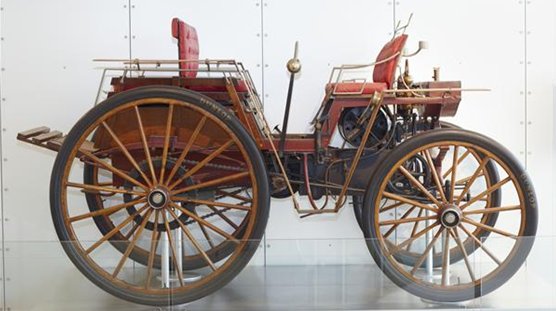


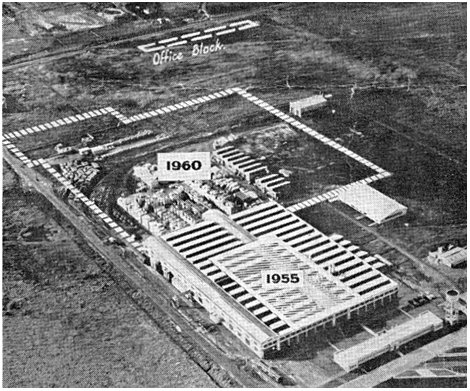


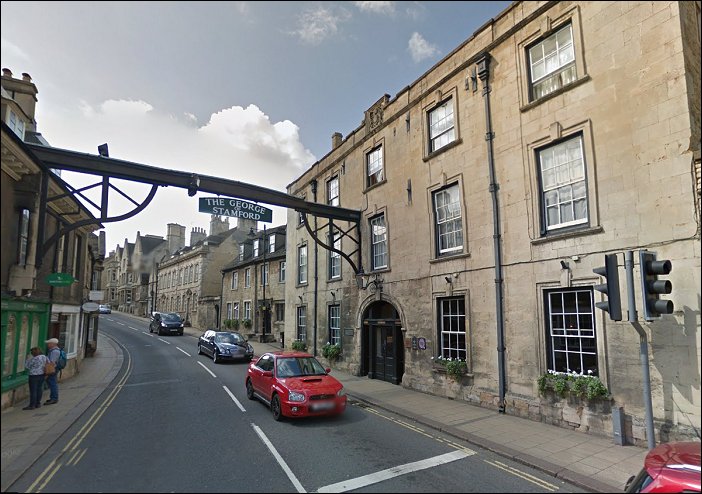


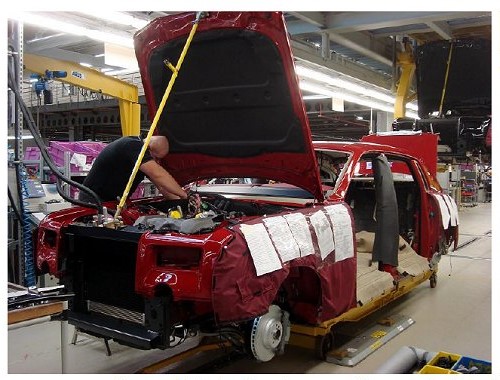
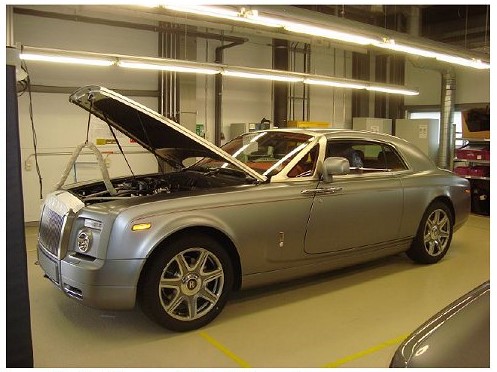

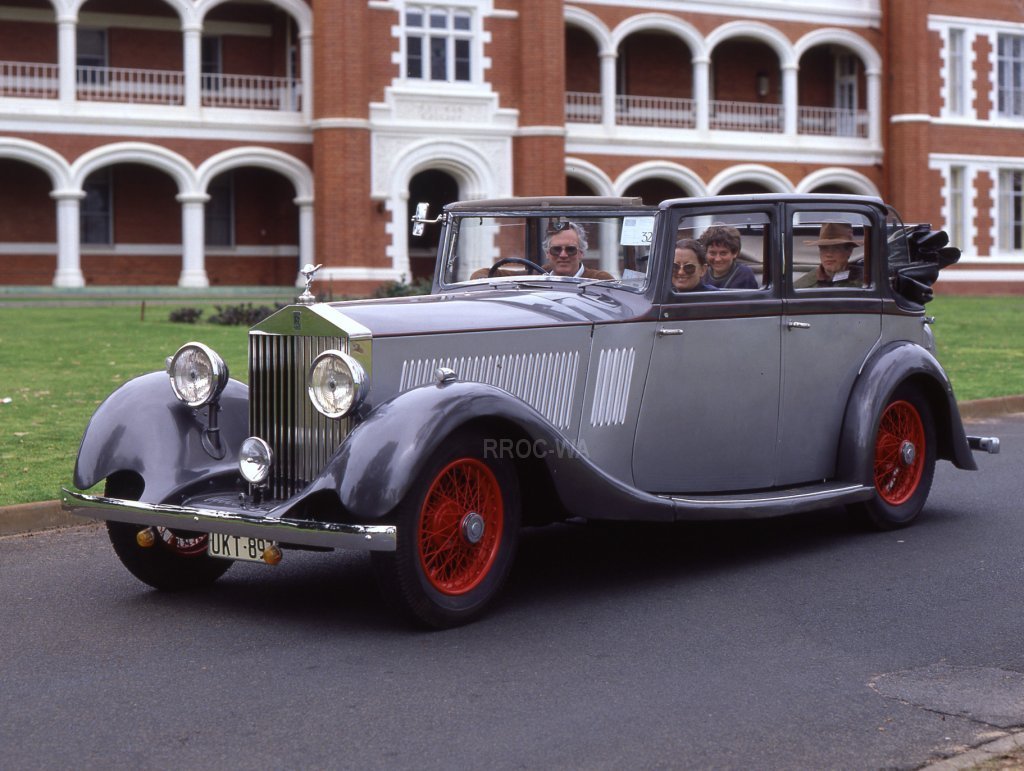

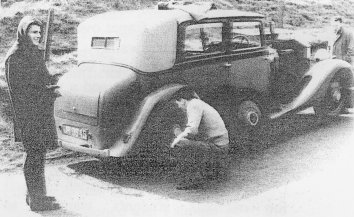

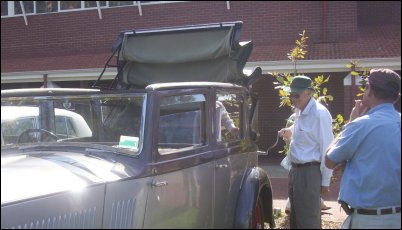


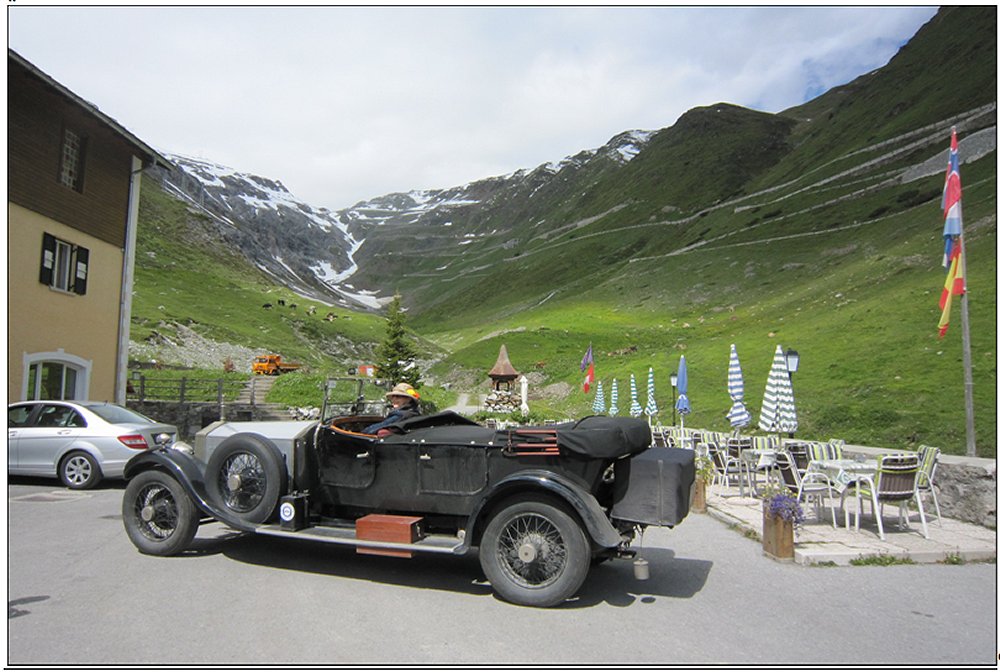


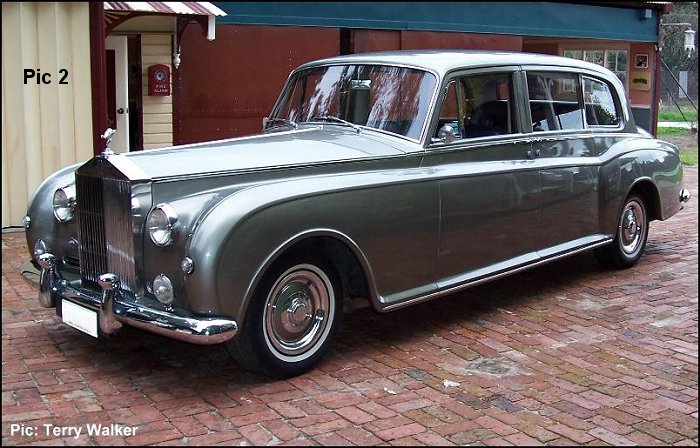


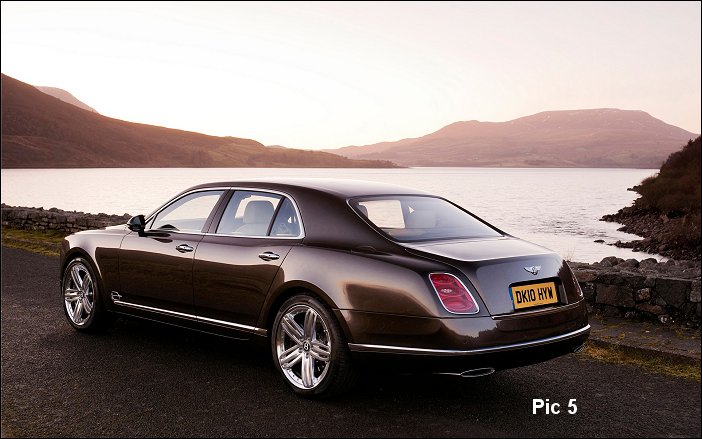


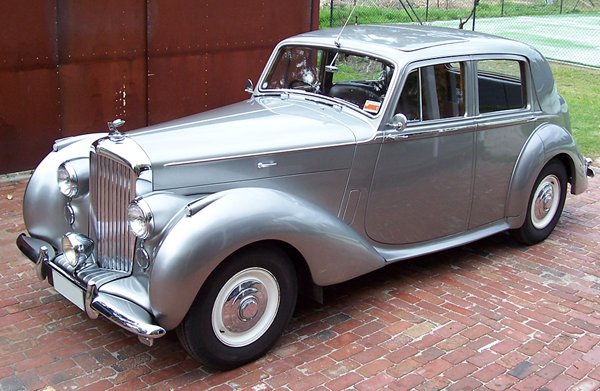


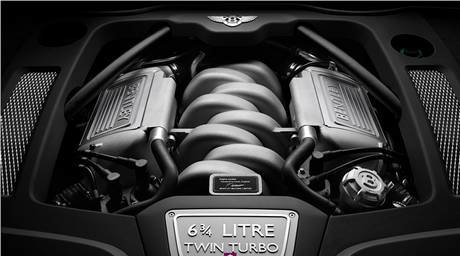
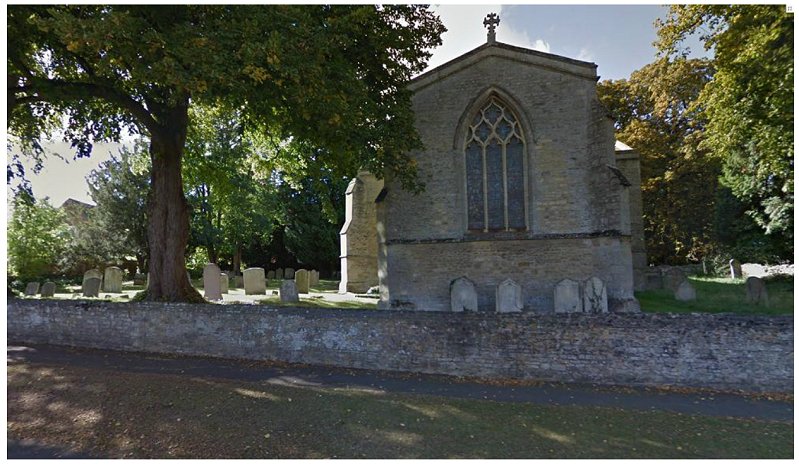
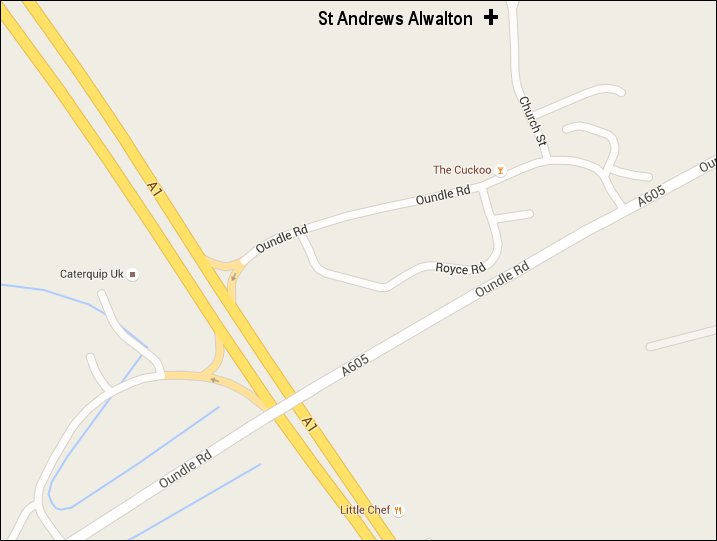


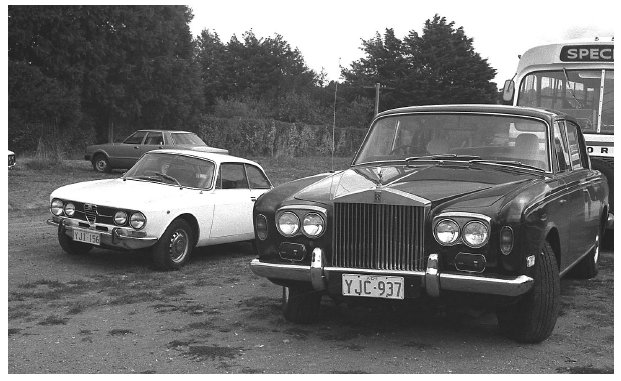


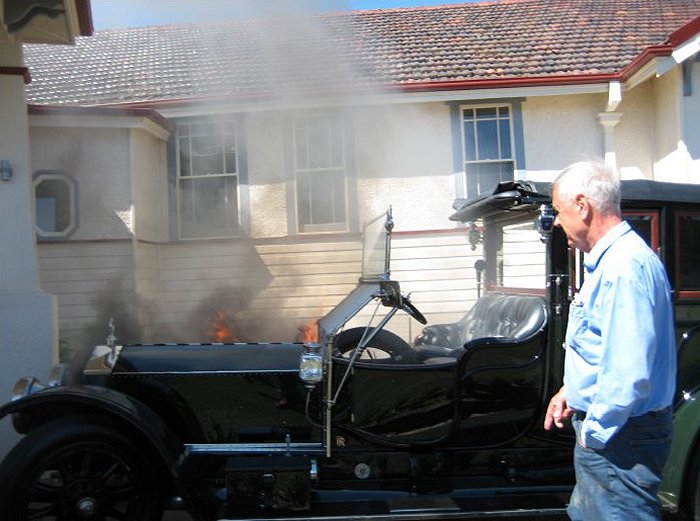

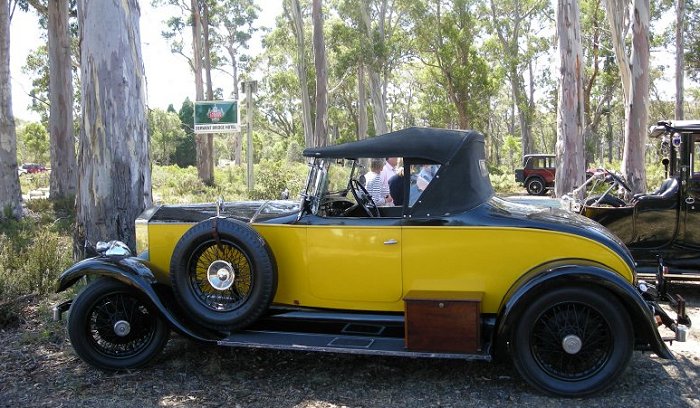


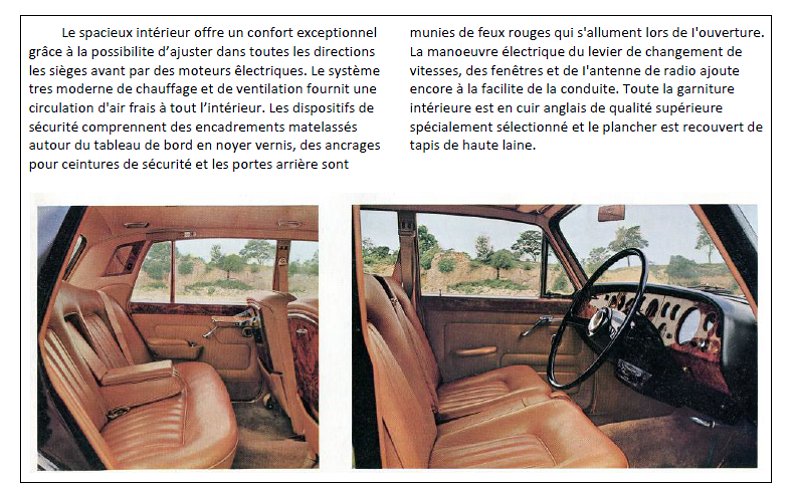

 Rolls-Royce Owners' Club of Australia (WA Branch Inc)